Bunion Correctors: Do They Actually Work?
The honest answer: they can help how your bunion feels, and they cannot change what it is. Knowing the difference saves money and frustration.
Read the article →The bump beside your big toe isn't tissue growing; it's the joint itself migrating out of position. Bunions develop over years, which sounds discouraging but is actually leverage: there is usually plenty of time to keep the joint comfortable, slow the drift, and, if surgery ever becomes worthwhile, choose the timing on your terms instead of in a crisis.
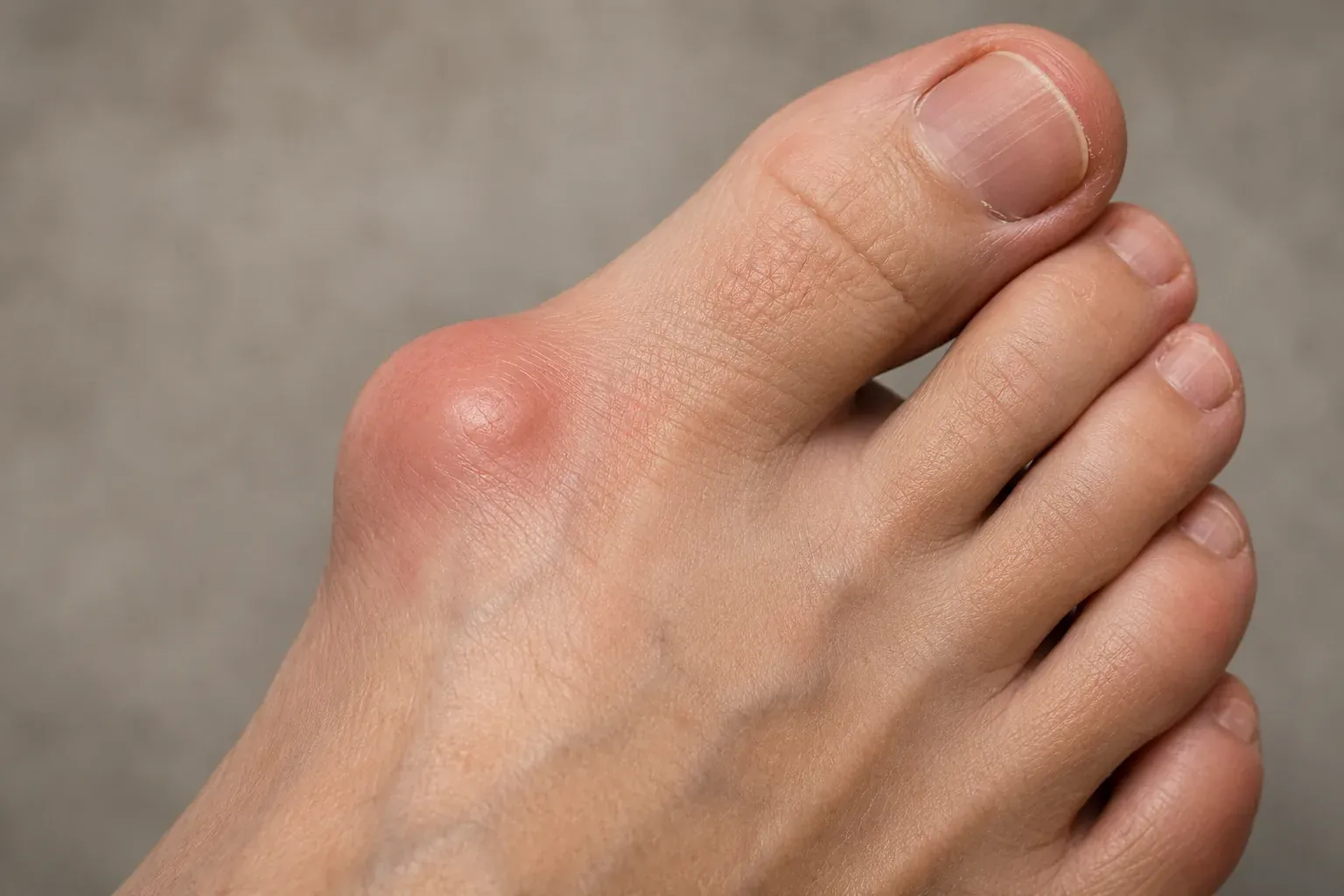
Behind every bunion is an unstable first ray: the long first metatarsal bone drifts toward the midline of the body while the big toe tilts the opposite way, and the joint between them bulges at the seam. Because bone has moved, the deformity is measured in degrees on an X-ray and staged from mild to severe. Pain can come from three distinct sources (the bump rubbing in shoes, the misaligned joint grinding, or the second toe being crowded out of position), and each source calls for a different fix.
Dr. Galant tests the joint's motion, checks whether the deformity can be passively corrected, watches how your gait loads the first ray, and takes standing X-rays, which reveal the true angles under body weight rather than on a table. That combination stages the bunion and, just as important, pinpoints which of the three pain sources is yours, because treating the wrong one is how bunion care fails.
The right time is when the bunion starts costing you something: shoes you can no longer wear, an ache after long days of walking or standing, a visible change from one year to the next. An early visit is not a commitment to surgery. It establishes a baseline X-ray, addresses the mechanics driving the drift, and often keeps you comfortable for years. Waiting until the joint is stiff and arthritic is what narrows the options.
Call (201) 568-2100 promptly for: sudden severe pain, redness, and heat at the joint, which can be gout or infection rather than the bunion itself. Urgent foot problems are worked into the schedule faster.
Treatment starts with the simplest option likely to work and escalates only when needed.
The fastest relief is a toe box shaped like your foot's current width, not its old one. Gel shields cut friction over the bump, and spacers protect the second toe from being crowded.
By controlling the inward roll that pushes the first metatarsal off course, orthotics address the mechanism itself: less load on the sore joint now, slower drift going forward.
A suddenly red, throbbing bunion is usually an inflamed bursa over the bump, and targeted treatment settles it within days. Severe heat and redness gets evaluated for gout or infection first, since those mimic a flare.
When the joint hurts despite good shoes and support, surgery realigns the bone angles directly. As a board-certified foot surgeon, Dr. Galant matches the procedure to your bunion's measured stage and walks through the recovery honestly before anything is scheduled.
The bone position can't be changed without surgery; no splint, spacer, or exercise moves a metatarsal back into line. But the pain, the flares, and the rate of progression respond well to non-surgical care, and plenty of patients manage a bunion comfortably for life without an operation.
It depends on the procedure your bunion's severity requires, but the broad shape is: walking in a protective surgical shoe or boot early on, a transition back to regular shoes over roughly six to eight weeks for most corrections, and residual swelling that can take months to fully settle. You'll hear the specific timeline for your procedure before you decide anything.
Day-to-day variation usually tracks the bursa, the small fluid sac over the bump, which flares with friction and settles with rest, plus whichever shoes and mileage the day involved. The underlying alignment doesn't change daily; the irritation on top of it does. Frequent flares are a sign the current shoe and support strategy needs adjusting.
It's reasonable, especially if you're noticing early drift or pressure marks. Bunions follow inherited mechanics, and controlling those mechanics early is far easier than correcting a fixed deformity later. That goes for kids and teens too; the practice sees patients of all ages, and juvenile bunions are worth watching.
The honest answer: they can help how your bunion feels, and they cannot change what it is. Knowing the difference saves money and frustration.
Read the article →Four real options, very different success rates. An honest comparison before you spend another year on the wrong one.
Read the article →Every ingrown toenail is angry; not every one is infected. Here's the line, and what crossing it means.
Read the article →One visit at our Tenafly office gets you a diagnosis and a plan. Call (201) 568-2100 or book online.