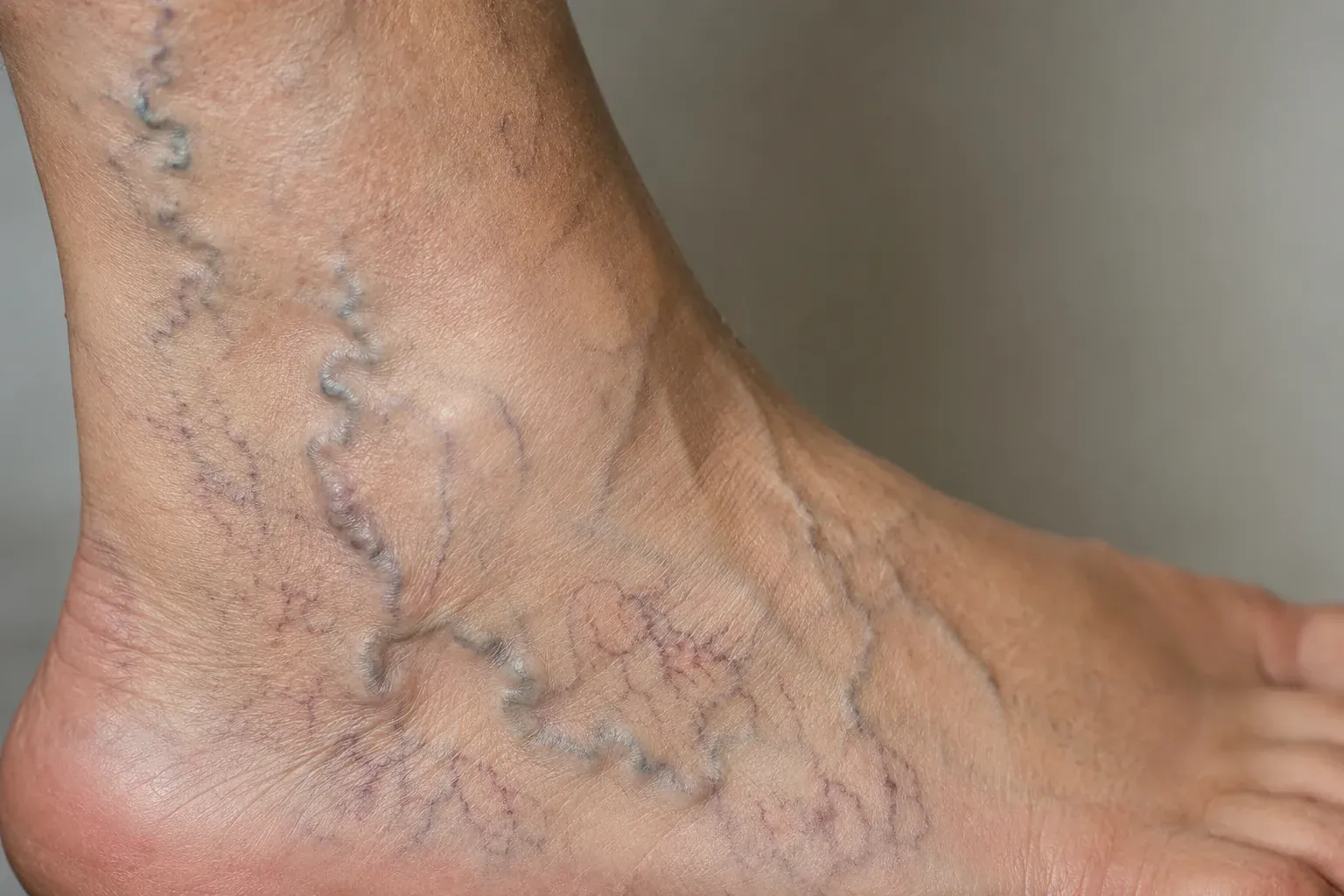
Poor Circulation in Your Feet: Signs You Shouldn't Explain Away
Feet are the first place circulation problems show and the last place people look for them. The signs have patterns.
Read the article →Diabetes rewrites the rules for feet. Injuries that would announce themselves loudly in anyone else can develop in silence, then heal slowly once discovered. The right response isn't fear; it's a schedule. Regular exams, safe professional nail care, and a plan for reacting fast turn most would-be diabetic foot emergencies into non-events.
Two complications drive nearly all diabetic foot trouble. Neuropathy dims sensation from the toes upward, so blisters, pressure sores, and even small fractures can go unfelt. Vascular disease narrows the small arteries feeding the skin, so any break in it repairs slowly and infection gains ground. Diabetic foot care is structured surveillance against both: your sensation and circulation are mapped and tracked, calluses and nails are managed before they can cause wounds, and rechecks happen on a schedule set by your measured risk, not by symptoms, which can no longer be trusted to report honestly.
The comprehensive exam measures your risk instead of guessing at it. A 10-gram monofilament and vibration testing map exactly where sensation has faded. Pulses and skin findings grade circulation. Pressure points, calluses, deformities, and nails are inspected one by one, and your footwear is checked inside and out for hidden hazards. Dr. Galant documents a risk category and recheck interval, which also gives your primary physician and your insurer exactly what they need.
If you have diabetes and have never had a podiatric foot exam, that alone is the trigger: book one. After the baseline, the interval follows the findings, from yearly when sensation and circulation test well to every two or three months when neuropathy, deformity, or a past ulcer raises your risk. Separately, any new wound, warm or red area, swelling, or color change is a same-day phone call. With diabetic feet, watch-and-wait is the one strategy that reliably fails.
Call (201) 568-2100 promptly for: any open sore, blister, or drainage; a suddenly warm, red, or swollen foot (with or without pain); black or blue skin changes; a callus with dark or bloody discoloration. Urgent foot problems are worked into the schedule faster.
Treatment starts with the simplest option likely to work and escalates only when needed.
Your recheck interval is set by risk category and adjusted as findings change. Evening hours on Tuesday and Thursday and Saturday mornings make the schedule realistic to keep, even around a full work week.
Thick nails and heavy calluses are trimmed and thinned in the office with sterile instruments. With reduced sensation, this routine care carries outsized value: a callus thinned today is an ulcer that never forms.
Footwear guidance suited to feet that can't feel a bad fit, therapeutic shoes for patients who qualify, and custom inserts that offload the exact spots your exam flags as high pressure.
New sores are seen urgently, cleaned, offloaded, and dressed appropriately, with hospital-level wound care coordinated when a wound needs more. In diabetic wound care, the calendar is the enemy; speed is the treatment.
Daily, ideally at the same time you already do something else, like after a shower. Look at the tops, soles, and between the toes, using a mirror or a family member for the parts you can't see. You're looking for redness, blisters, cracks, drainage, color changes, or a warm spot. Report what you find; don't treat it yourself.
A deep, roomy toe box, soft interior with no prominent seams, and a sole thick enough to shield you from objects you might not feel. Shake shoes out before every wearing and run a hand inside; neuropathic feet have been injured by pebbles their owners never felt. Patients who qualify can get therapeutic shoes covered, which the office can help arrange.
Yes, though likely less often. Good control slows complications but doesn't eliminate them, and neuropathy develops so gradually that self-assessment misses it. A baseline exam tells you your actual risk; if sensation and circulation test well, an annual recheck is usually all you need, which is a small price for catching a change early.
Sometimes. Burning or tingling in both feet, infections that keep recurring, and cuts that heal slowly occasionally show up before diabetes has been diagnosed. When the foot exam raises that suspicion, Dr. Galant coordinates with your primary care physician to get the bloodwork done.
Feet are the first place circulation problems show and the last place people look for them. The signs have patterns.
Read the article →On most feet a callus is cosmetic. On a diabetic foot it's a pressure gauge, and sometimes a lid over something worse.
Read the article →Medicare pays for therapeutic shoes and inserts for qualifying diabetics every year. Most eligible patients never use it.
Read the article →One visit at our Tenafly office gets you a diagnosis and a plan. Call (201) 568-2100 or book online.